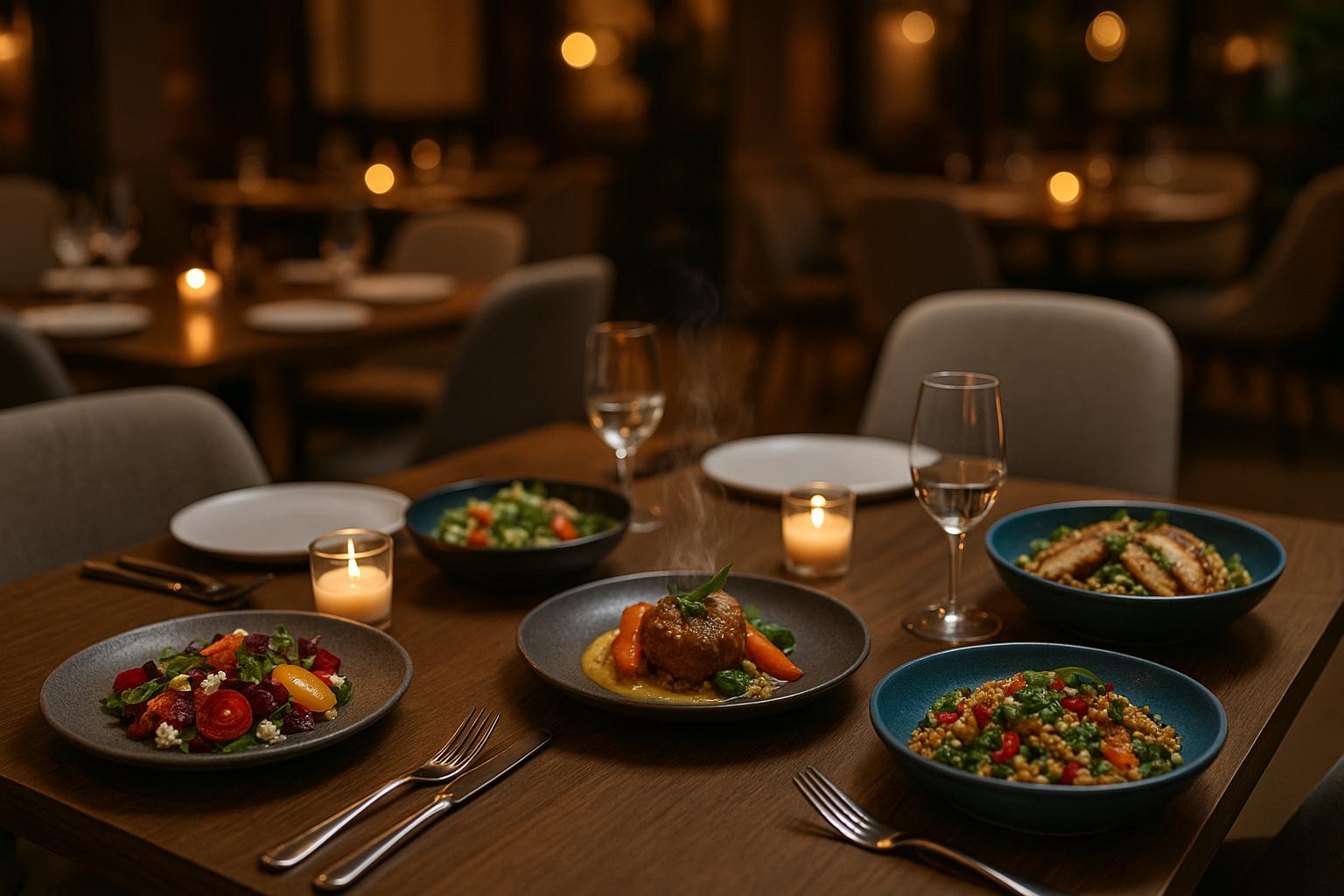
Sensory Dining for Groups: What to Expect
Sensory dining transforms a meal into an immersive experience by engaging all five senses - sight, sound, taste, smell, and touch. It’s not just about food; it’s about creating memorable group connections through shared, interactive moments. Popular for family events, corporate gatherings, or nights out with friends, sensory dining blends visual storytelling, soundscapes, and unique presentations to spark conversation and leave lasting impressions.
Here’s what you need to know:
- What It Is: A dining experience that combines food with interactive elements like projection mapping, custom soundtracks, and themed environments.
- Why It’s Popular: It encourages interaction, breaks social barriers, and creates unforgettable memories for groups.
- What to Expect: Venues like London’s Sensory Feast or Dans Le Noir offer experiences ranging from dining in darkness to animated table projections.
- How to Prepare: Share dietary needs early, dress appropriately for the theme, and communicate sensory sensitivities to ensure comfort.
- Pricing: Costs vary, from $49 for a 90-minute projection-mapped meal to $80+ for performance-based dining.
Sensory dining goes beyond food - it’s a journey that combines art, storytelling, and cuisine to bring people closer together.
What is Sensory Dining?
Sensory dining is an experience that goes beyond just eating - it engages all five senses: sight, sound, smell, taste, and touch. Unlike traditional dining, where the focus is mainly on the food, sensory dining turns the entire environment into part of the meal. Elements like lighting, soundscapes, aromas, and interactive presentations are carefully orchestrated to enhance the flavors and create emotional connections with the food. This approach is particularly captivating for group dining events.
Think of it as a theatrical performance, where each course tells a story or evokes a specific emotion. For example, venues like Kitchen Theory use light, sound, and subtle effects to immerse diners in a multi-sensory journey.
What makes sensory dining stand out is its deliberate attention to detail. Everything - from the temperature contrasts between dishes to the ambient sounds of food preparation - is designed to shape how you perceive taste. Let’s dive into the key components that bring this culinary theater to life.
Core Components of Sensory Dining
Sensory dining is built on several essential elements that work together to create a fully immersive experience.
Visuals:
Projection mapping and creative lighting transform dining spaces into dynamic, ever-changing environments. At Sensory Feast in London, for instance, digital animations and shifting light displays set the mood and elevate the dining experience.
Sound:
Music, live performances, and even the natural sounds of cooking - like the sizzle of a steak or the crack of a crème brûlée - add depth to the atmosphere. At CLAP London’s rooftop bar, resident DJs and sounds from live cooking counters blend seamlessly into the meal.
Aromas:
Scents play a powerful role in memory and taste. Whether they come naturally from the food or are introduced with techniques like atomizers, these aromas are carefully chosen to complement each course.
Touch:
The textures of the food and intentional temperature contrasts engage the sense of touch. Interactive elements, such as live cooking stations where diners can watch chefs in action, add another layer of sensory involvement.
Storytelling:
This ties everything together. At Sensory Feast, for example, each course is part of a larger narrative, making the meal feel like chapters in a story.
A standout example of sensory dining was The Banquet of Hoshena, held at Westfield Shopping Centre in Shepherd's Bush in 2019. This immersive 2-hour dining experience featured a 5-course menu where each dish evoked an emotion like fear, anger, sadness, or happiness. Guests were treated to 2D and 3D projection mapping, levitating dishes, psychedelic lighting, special effect smoke, and narrated storytelling in the background. Despite the theatrical flair, the food quality remained high. The experience cost $107 without drinks and $139 with specially crafted cocktails and wines.
These sensory elements don’t just enhance individual enjoyment - they also create a shared experience that brings people closer together.
Why Groups Enjoy Sensory Dining
Sensory dining is a natural fit for groups because it encourages interaction and conversation. With everyone immersed in the same visual, auditory, and flavorful elements, it breaks down social barriers often found in traditional dining settings. Take Dans Le Noir, for example, where diners eat in complete darkness with the help of visually impaired waiters. This unique setting sparks open conversation, even among strangers.
Engaging all five senses stimulates the brain in ways that make the experience deeply memorable. The combination of surprise, wonder, and delight creates emotional connections that go beyond the meal itself. For groups - whether it’s a family gathering, corporate event, or special celebration - this shared sensory journey strengthens bonds and leaves a lasting impression.
The novelty of the experience, paired with Instagram-worthy moments like dramatic projection mapping, adds an extra layer of excitement. These moments not only give diners something to talk about during the meal but also create memories they’ll cherish long after the event is over.
How to Prepare for a Sensory Dining Experience
Planning ahead is key to ensuring everyone enjoys this immersive and unforgettable dining journey. Just like the intricate details of the meal itself, your preparation lays the groundwork for a smooth and engaging sensory experience. Here’s how to get ready.
Sharing Dietary Requirements and Allergies
Make sure to inform the venue of any dietary needs or allergies well in advance. Last-minute changes can disrupt the flow of the experience, so aim to communicate this information early. For smaller groups, notify the venue at least 7–14 days before your reservation. For larger parties of 10 or more, provide 2–3 weeks’ notice. This gives the kitchen team enough time to source the right ingredients and craft alternative dishes that maintain the event’s multisensory design.
Some venues, like INCA in Soho, are known for accommodating a wide range of dietary preferences, including gluten-free, dairy-free, and allergen-friendly options. When making your reservation, clearly specify any dietary restrictions, whether vegetarian, vegan, pescatarian, or tied to religious practices. Don’t forget to mention common allergies like nuts, shellfish, or gluten, and be specific about the severity of the allergy and any concerns about cross-contamination. Providing these details in writing minimizes the risk of miscommunication and ensures that every guest’s needs are met seamlessly.
Dress Code and Accessibility
Check the venue’s dress code and accessibility guidelines ahead of time. Your choice of attire will often depend on the specific sensory dining experience. For upscale events like CLAP London’s Omakase menu or Sensory Feast’s projection-mapped dining at Spagnoletti, smart casual to formal attire is usually appropriate. Men might consider wearing dress shirts or blazers, while women could opt for dresses or stylish separates. However, for unique experiences like dining in complete darkness at Dans Le Noir, casual and comfortable clothing is more suitable, as you may be using your hands to explore textures and flavors. Some themed events may even encourage specific attire, like period costumes or cocktail wear.
It’s also a good idea to confirm accessibility details. Many sensory dining venues in London accommodate wheelchair users and other mobility needs, but some experiences may present challenges. For instance, venues like CLAP London may span multiple floors, requiring the use of stairs or elevators. To avoid surprises, communicate any accessibility requirements - such as seating preferences, accessible restrooms, or service animal accommodations - at least 2–3 weeks in advance. If anyone in your group is sensitive to light (especially in settings with projection mapping or strobe effects), notify the venue early so they can make adjustments.
Managing Sensory Sensitivities
Sensory dining experiences are designed to engage all your senses, but not everyone processes stimuli in the same way. To ensure a comfortable experience for everyone, it’s important to address any sensory sensitivities beforehand. If you or someone in your group is sensitive to bright lights, loud sounds, or strong scents, let the venue know during the booking process.
For example, if strobe or light effects might cause discomfort, request seating adjustments. If sound levels are a concern, ask about quieter areas or seating options. Venues like Kitchen Theory’s Chef’s Table use soundscapes and atomizers to enhance the experience, so understanding what to expect can help you prepare. For those sensitive to strong smells, identify any specific triggers in advance. Arriving 15–20 minutes early can also help you acclimate to the environment.
Consider bringing items like noise-canceling earplugs or sunglasses if needed, but check with the venue first to ensure these don’t interfere with the intended ambiance. A pre-event briefing can also help ease any anxiety by familiarizing you with the sensory elements. If you’re attending with a group, discuss the nature of the experience beforehand and establish a system - like a subtle signal - for anyone who might need a break or adjustment during the meal.
Since most sensory dining experiences last between 1.5 to 3 hours, extended periods of sitting are common. If someone in your group has mobility concerns or back issues, communicate these needs in advance to ensure proper accommodations.
Approaching the event with an open mind and a sense of curiosity can make the experience even more enjoyable. With thoughtful planning, everyone in your group can fully embrace the multisensory journey and create lasting memories.
What Happens During a Sensory Dining Event
Once you've prepared for your sensory dining adventure, understanding how the event unfolds can help set the right expectations. These experiences are typically divided into three main stages, each designed to stimulate your senses and create unforgettable moments.
Arrival and Welcome
As you and your group step into the sensory dining venue, you'll immediately notice how the space feels different from a traditional restaurant. The atmosphere is carefully crafted with unique lighting, curated soundscapes, and themed decor that set the tone for the evening’s journey.
The event begins with introductions from the staff, who outline the evening’s theme and how each sensory element contributes to the overall experience. This briefing not only provides context but also ensures everyone feels at ease and ready to dive into this immersive adventure.
Course Service and Interactive Features
After the warm welcome, the main event begins. Each course is presented as part of a larger story, designed to engage your senses in ways you might not have experienced before. The dishes are often visually stunning, paired with focused lighting, tailored sounds, and carefully chosen aromas that enhance the flavors.
Some venues, like Sensory Feast in London, use projection mapping to transform the dining table into a dynamic canvas of visuals. Others, such as CLAP London, add energy and excitement with live sushi and robata counters, allowing diners to see the food being prepared right before their eyes.
Chefs or servers often explain the inspiration behind each dish, encouraging conversation and turning the meal into a shared exploration of taste and creativity. Interactive elements, like touch-sensitive tables, invite diners to engage with their food in unexpected ways, creating moments of discovery that everyone can enjoy together.
At places like Kitchen Theory, where multisensory dining has been a focus for over a decade, techniques such as atomizers, dry ice effects, and immersive soundscapes add an extra layer of excitement. These sensory enhancements naturally spark discussions as diners share their impressions of the flavors and aromas.
Timing and Event Structure
Most sensory dining events last between 1.5 and 2 hours, with venues like Sensory Feast offering a 90-minute experience. The evening is carefully structured to maintain a balance between engagement and relaxation. Staff monitor the group’s pace, ensuring no one feels rushed and transitions flow smoothly.
Subtle cues, like changes in lighting or sound, signal the progression from one phase to the next. This thoughtful pacing helps avoid sensory overload while keeping the group immersed in the experience.
Each dish builds on the evening’s narrative, providing a shared framework for conversation and connection. By the time the final course or dessert is served, the story comes to a satisfying close, leaving your group with lasting memories of a meal that was as much about art and exploration as it was about food.
sbb-itb-fa1ae46
Sensory Dining Options in London
London offers an array of sensory dining experiences that go beyond the usual culinary outings. These venues are designed to awaken your senses through imaginative techniques like projection mapping, dining in complete darkness, and interactive performances. Whether you're planning a family celebration, a night out with friends, or a corporate event, these unique formats promise to create unforgettable memories.
Here’s a closer look at three standout sensory dining experiences in London.
Projection-Mapped Dining
At Sensory Feast London, located in Spagnoletti at The Megaro Hotel in King’s Cross, dining becomes an immersive visual journey. Using projection mapping, the tables and walls transform into animated stories that unfold during a 90-minute, three-course meal. Guided by Michelin-starred Chef Adam Simmo, the menu features dishes like golden leaf ribeye steak with sweetcorn purée and pan-fried salmon with parsnip saffron purée. Priced at $49.00 per person, this experience is available from December 3 through September 30 and is perfect for families, friends, romantic evenings, or corporate gatherings. It’s a feast for both the palate and the imagination.
Kitchen Theory takes the concept even further by blending projection mapping with other multisensory elements. Their Chef’s Table Supperclub, crafted over a decade of expertise, transforms meals into theatrical events. As they describe it, the added layers of sensory engagement bring "a touch of magic and showmanship", making it an ideal choice for group interactions.
For those looking for an even more unconventional experience, dining in complete darkness offers a fresh perspective.
Dining in Complete Darkness
At Dans Le Noir, the absence of sight amplifies your other senses, creating a heightened awareness of taste, aroma, and texture. Guided by visually impaired waiters, this experience fosters a deeper connection among diners, encouraging conversation and hands-on exploration. Without visual cues, flavors often feel more intense and complex, turning a simple meal into a fascinating sensory adventure. It’s a unique way to bond with your group while discovering food in an entirely new light - or lack thereof.
If you’re intrigued by interactive dining, performance-based experiences bring another layer of excitement.
Performance and Theme-Based Dining
CLAP London, located in Knightsbridge, offers a vibrant blend of culinary artistry and entertainment. Spread across multiple floors, it features live sushi and robata counters alongside a 180-degree rooftop bar. The Omakase menus - meaning "I leave it up to you" in Japanese - invite diners to embark on a chef-curated culinary journey. For private events, CLAP London provides customizable spaces, seasonal menus, expertly paired cocktails, and tailored entertainment. Pricing starts at approximately $80 per person, making it a great option for both intimate gatherings and larger corporate events.
Meanwhile, INCA in Soho merges Latin American-inspired fine dining with theatrical flair. Open Wednesday through Sunday, with extended hours on weekends, INCA offers tasting menus starting from $80 per person. Signature dishes include tuna tostadas, miso-glazed black cod, and complimentary guacamole with corn chips. The venue also caters to diverse dietary needs, offering gluten-free and dairy-free options. With its upscale presentation and interactive service, INCA ensures an engaging and memorable group experience.
Unlike projection-mapped or dark dining, performance-based venues actively involve diners in the culinary journey. From chef demonstrations to custom entertainment, these experiences encourage participation, creating a dynamic and engaging atmosphere. Each venue brings its own unique twist, showcasing how sensory dining can turn a meal into a lasting memory for any group.
Conclusion
Sensory dining turns a simple group meal into an extraordinary adventure. These unique venues blend top-tier cuisine with creative elements like projection mapping, dining in total darkness, or live performances, sparking conversation and connection among diners. Whether you're organizing a corporate team-building event, celebrating a milestone birthday, or just planning a night out with friends, London's sensory dining options provide an exciting twist on the typical restaurant experience.
The beauty of sensory dining lies in tailoring the experience to your group's personality. Whether you’re drawn to visually stunning projection mapping, the intrigue of dining in darkness, or the energy of live performances, each venue offers something special. From captivating visual storytelling to the seamless fusion of food and theater, these experiences deliver more than just a meal - they create a lasting impression.
It’s not just about the food (though the food is incredible); it’s about creating memories and strengthening bonds. Many who have tried sensory dining say that traditional restaurants pale in comparison. To make the most of your experience, book ahead and communicate any dietary or accessibility needs. Most experiences last 1.5 to 2 hours, offering a mix of entertainment and delicious cuisine, with menus that cater to a range of preferences, including vegetarian, vegan, gluten-free, and dairy-free options.
Sensory dining reimagines the idea of a group meal, blending culinary mastery with artistic innovation to craft moments of pure wonder. Whether you choose projection mapping, dining in darkness, or performance-based experiences, you’re not just booking a meal - you’re creating a story to share long after the final dish has been enjoyed.
FAQs
What makes sensory dining experiences unique compared to regular dining?
Sensory dining delivers an experience unlike any other, engaging all five senses - sight, sound, touch, taste, and smell - in ways that go beyond traditional meals. Picture dining blindfolded, letting your taste buds and nose take center stage, or enjoying a meal paired with immersive soundscapes that enhance the flavors on your plate. Some experiences even include interactive presentations that bring textures and tastes to life in unexpected ways.
If you're planning to try sensory dining, come with an open mind and a willingness to explore. These experiences are designed to push boundaries, offering a mix of fun and thought-provoking moments. It's a perfect choice for groups seeking something truly memorable and out of the ordinary.
What should I keep in mind when planning a sensory dining experience for a group with different dietary preferences?
When organizing a sensory dining event for a group with varied dietary needs, it's crucial to discuss these preferences with the venue ahead of time. Many sensory dining establishments provide customized menus or adjustments for common dietary requirements, such as vegetarian, vegan, gluten-free, or allergen-specific dishes. This proactive communication helps ensure that every guest can enjoy the experience without worry.
It's also worth thinking about the group's comfort with trying unusual or unfamiliar foods. Sensory dining often features unique flavors, textures, and presentations that some may find adventurous. If you can, take a look at the menu or event details beforehand to confirm they match the group’s preferences and expectations. A little preparation goes a long way in creating an enjoyable and inclusive experience for everyone.
How can individuals with sensory sensitivities prepare for a sensory dining experience?
Sensory dining events offer a chance to immerse yourself in a feast for the senses, but for those with sensory sensitivities, a little preparation can go a long way in ensuring a comfortable and enjoyable experience. Start by reaching out to the venue ahead of time to learn more about the menu, atmosphere, and any accommodations they might offer - like dimmed lights, quieter spaces, or modified meal options.
If specific sensory triggers are a concern, consider bringing items that provide comfort, such as noise-canceling headphones or a favorite textured object. Arriving early can also give you time to settle in and adjust to the environment before the event kicks off. With thoughtful planning, sensory dining can become an inclusive and unforgettable experience for everyone involved.