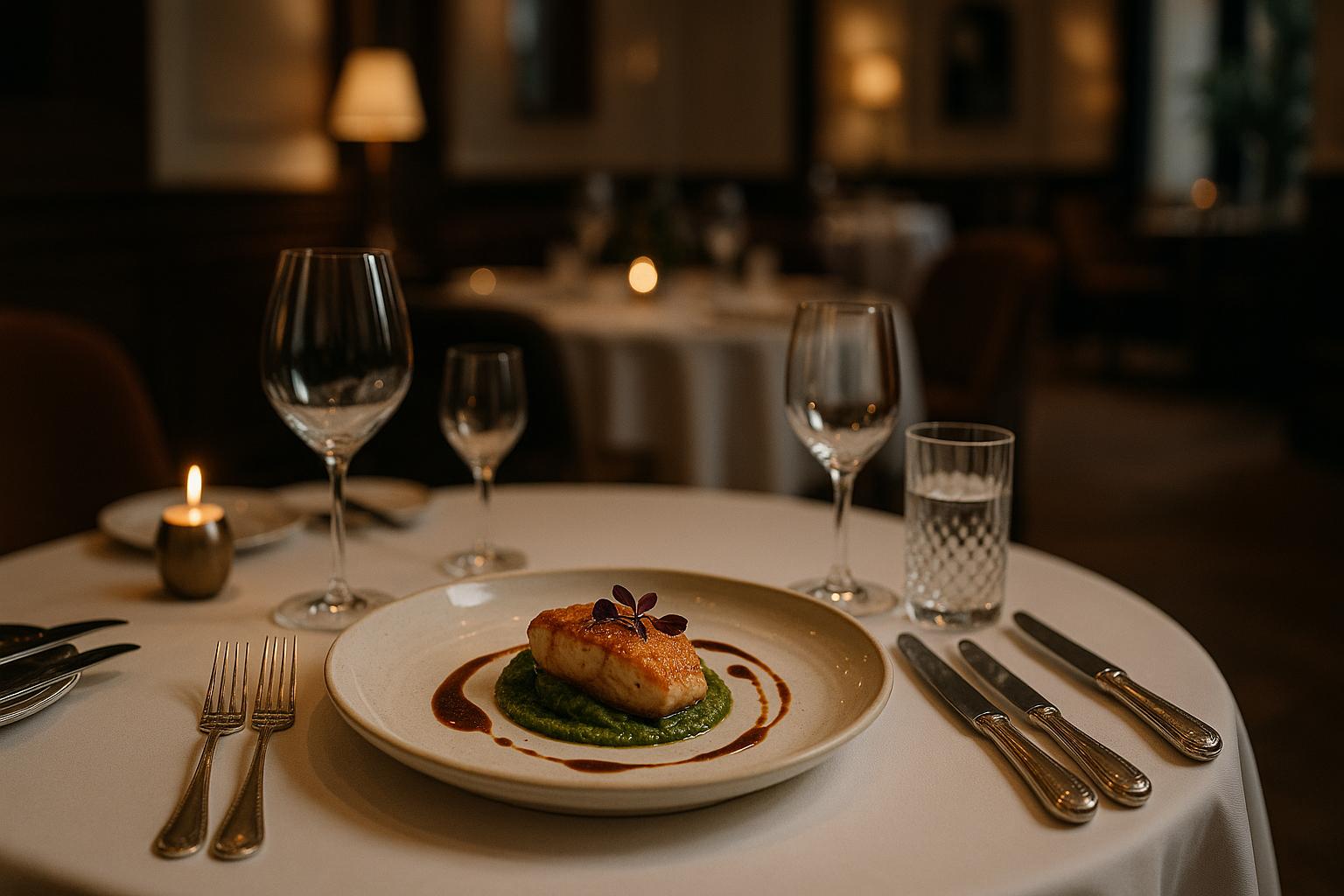
Checklist for First-Time Fine Dining in London
Fine dining in London is a blend of exquisite cuisine, impeccable service, and elegant ambiance. Whether you're dining at a Michelin-starred restaurant or a hidden gem, preparation is key to enjoying the experience. Here's everything you need to know:
- Reservations: Book 2–4 weeks in advance, or 2–3 months for top spots like Restaurant Gordon Ramsay. Provide dietary preferences upfront and confirm your booking.
- Dress Code: Formal attire is a must. Men should wear jackets and dress shoes; women should opt for polished outfits like dresses or separates. Avoid jeans, sneakers, or casual wear.
- Etiquette: Arrive on time, follow table manners, and use cutlery correctly. Keep phones silent and out of sight.
- Ordering & Tipping: Coordinate courses with your group, and tip 10–15% unless a 12.5% service charge is included.
Expect meals to last 2–3 hours, with a focus on savoring each course at a relaxed pace. London offers a variety of fine dining experiences, from Michelin-starred institutions to unique venues like The Harwood Arms. With careful planning, you'll enjoy a memorable culinary adventure.
LUXURY DINING at LONDON's BEST RESTAURANTS!
Booking Your Table and Planning Your Visit
When it comes to fine dining in London, every detail counts. Securing a table at the city's top restaurants requires thoughtful planning, as many of these sought-after spots fill up quickly. Early preparation is key to ensuring your experience goes smoothly.
Finding Top-Rated Restaurants
Start by narrowing your search to restaurants with ratings of 4.5 stars or higher and at least 100 reviews on platforms like Google Reviews and TripAdvisor. These metrics often reflect consistent quality and service that meet fine dining expectations. For a curated selection, check out London Best Eats, which highlights highly rated establishments. These steps will help you pick a restaurant that matches your expectations.
Making Your Reservation
For most fine dining venues, aim to book your table 2–4 weeks in advance. If you're eyeing Michelin-starred gems like Restaurant Gordon Ramsay or Core by Clare Smyth, plan even further ahead - reservations often need to be made 2–3 months in advance, particularly for weekend evenings. Due to their limited seating, these exclusive spots frequently maintain waiting lists to ensure an intimate dining atmosphere.
When reserving, provide essential details like your name, contact information, date, time, and number of guests. Many restaurants now request credit card details to secure bookings and may require a deposit, especially for tasting menus or special events. Be mindful of cancellation policies, which typically require 24–48 hours’ notice to avoid fees.
If you or your guests have dietary restrictions or allergies, mention them at the time of booking. Whether it's a gluten-free request or a nut allergy, clear communication ensures the kitchen can accommodate your needs.
Always request a confirmation of your reservation. If you don’t receive it within 24 hours, follow up with a call. Keeping these details handy will make your visit stress-free and enjoyable.
Arriving on Time
Punctuality is non-negotiable in London’s fine dining scene. Arriving late - by more than 15–30 minutes - could result in your table being given to another party. Such delays can disrupt the restaurant's carefully planned service and impact other diners.
To avoid mishaps, allow extra time for travel and use real-time navigation tools like Google Maps. Arriving 5–10 minutes early gives you a moment to settle in and fully enjoy the experience.
If unforeseen delays occur, call the restaurant immediately to inform them. London's fine dining establishments pride themselves on precision and high service standards, and punctuality is a reflection of the respect shared between diners and staff.
Dress Code and Appearance Guidelines
Dress codes are a cornerstone of London's fine dining scene. These rules aren't just about appearances - they're a vital part of maintaining the elegant atmosphere these establishments are known for. Showing up inappropriately dressed could mean being denied entry, so it's important to understand the expectations before you go.
Understanding Dress Requirements
Most fine dining restaurants in London set formal or smart attire as the standard. For men, this typically involves wearing a jacket, such as a suit or blazer, paired with a dress shirt and dress shoes. In many upscale venues, a tie is also strongly encouraged to complete the look.
For women, options include sophisticated dresses, cocktail outfits, or coordinated separates that exude elegance. The goal is to choose clothing that looks polished and refined, steering clear of overly casual or trendy styles.
Renowned establishments like The Ritz London, The Wolseley, and Claridge's are known for their strict dress codes. Men are often required to wear jackets and ties, while women are expected to don elegant attire that complements the venue's refined ambiance.
While the dress code may be slightly more relaxed during lunchtime at some restaurants, the safest approach is to dress formally regardless of the time of day. If you're unsure about a specific restaurant's policy, it's better to err on the side of caution and choose formalwear. Understanding what not to wear is just as crucial as knowing what is appropriate.
What Not to Wear
Certain items are strictly off-limits at fine dining establishments and could result in being turned away. Avoid wearing sneakers, jeans, shorts, t-shirts, sportswear, or flip-flops, as these are generally considered inappropriate.
For example, The Ritz London is known for turning away guests who fail to meet its dress standards, particularly those wearing casual footwear or denim. Similarly, Gordon Ramsay's Restaurant at Claridge's enforces a no-jeans, no-sneakers policy, emphasizing the importance of formal presentation.
It's not just casual items that can cause issues. Wrinkled clothing, overly revealing outfits, or anything that looks unkempt can also lead to problems. These restaurants see dress codes as an integral part of the dining experience, ensuring that all guests enjoy a refined atmosphere.
Personal Grooming Standards
Your overall grooming is just as important as your outfit. Well-groomed hair, polished shoes, and neatly pressed clothing all contribute to the sophisticated ambiance these restaurants aim to uphold.
Pay special attention to your footwear - clean, polished shoes are a must for formal settings. Scuffed or dirty shoes can detract from an otherwise impeccable outfit. Similarly, make sure your clothing is wrinkle-free and well-fitted, as this reflects respect for both the venue and your fellow diners.
Hair should be clean and styled appropriately, and your overall appearance should feel polished and professional. These grooming standards aren't arbitrary; they're part of the unspoken etiquette that enhances the dining experience for everyone.
If you're unsure about a restaurant's specific dress code, check their website. Many list dress requirements under sections like "FAQ" or "Visit Us." Resources like London Best Eats can also provide helpful details about dress codes and the overall atmosphere of featured restaurants, making it easier to prepare.
When in doubt, always lean toward formality. It's better to be slightly overdressed than to risk being turned away or feeling out of place. Bringing along a backup jacket or an elegant shawl is a smart move if you're uncertain about meeting the requirements. A polished appearance not only ensures entry but also sets the tone for the exceptional service and experience that awaits.
Fine Dining Etiquette Rules
Fine dining is about more than just enjoying a meal - it's an experience that thrives on respect, elegance, and a shared understanding of etiquette. In London's upscale restaurants, these unwritten rules help preserve the refined ambiance, ensuring you feel at ease while honoring the establishment and your fellow diners.
Table Manners and Seating
The way you conduct yourself at the table sets the tone for the entire dining experience. Here are some key practices to keep in mind:
- Wait for the staff to guide you to your seat. Greet your companions warmly, and in mixed groups, it’s customary for men to assist women with their seating.
- Place your napkin on your lap as soon as you sit down and use it subtly throughout the meal.
- Begin eating only after everyone at the table has been served. Try to match the pace of your fellow diners to maintain a natural flow of conversation and service.
- Sit upright with your elbows off the table. Chew quietly and speak only when your mouth is empty.
- When passing food, hand it to the left and accept it from the right. If you drop your cutlery, signal the staff rather than picking it up yourself.
Proper Cutlery Use
Navigating the array of cutlery at a fine dining table can feel daunting, but it’s simpler than it looks:
- Start with the utensils farthest from your plate and work your way inward with each course.
- Hold the fork in your left hand and the knife in your right (known as the continental style). Avoid switching hands between bites, as this is more common in casual dining settings.
- Never lick your knife or use cutlery to gesture during conversations. Keep your hands properly positioned at all times.
- Use your cutlery to communicate non-verbally with the server. For example, crossing your knife and fork in the center of your plate indicates you’re pausing, while placing them parallel signals that you’ve finished.
- Always taste your food before reaching for the salt or pepper. This shows respect for the chef’s skill and the intended flavor balance of the dish.
Phone and Personal Item Etiquette
In fine dining, distractions are unwelcome. Here’s how to handle personal items and technology:
- Keep your phone on silent and store it, along with any personal belongings, out of sight.
- If you need to take an urgent call, excuse yourself quietly and step outside. The same applies if you need to leave the table for any other reason.
- To get your server’s attention, make eye contact or raise your hand slightly. Avoid actions like snapping your fingers, waving, or calling out, as they can disrupt the calm atmosphere.
- Always communicate with staff politely. If you have dietary restrictions or special requests, express them clearly and courteously. If you're running late for your reservation, a quick call to inform the restaurant is a thoughtful gesture.
For more tips on navigating the world of fine dining and discovering London's best upscale restaurants, London Best Eats offers helpful insights to prepare you for these elegant experiences.
sbb-itb-fa1ae46
Ordering Food and Tipping Guidelines
Dining at a fine restaurant can sometimes feel a bit daunting, but understanding the process can make it much smoother. The secret is to stay in sync with your dining companions and communicate your preferences clearly to the staff.
How to Order Your Meal
When ordering, try to coordinate with your group so everyone enjoys their meal at the same pace. This helps avoid awkward moments where some finish their courses while others are still waiting. If you’re unsure about how many courses to order, take cues from your host or ask your server for advice on the restaurant’s typical meal flow.
As for etiquette, it’s polite to follow your host’s lead when choosing courses. In more traditional settings, the most senior guest often orders first. In mixed groups, it’s still somewhat common for women to be invited to order first, though this custom is less rigid at modern establishments. Also, avoid choosing the most expensive dish unless your host specifically encourages it.
Be sure to clearly communicate any dietary restrictions when placing your order. Servers are trained to accommodate a variety of needs, whether it’s allergies, religious considerations, or personal preferences.
If you’re unfamiliar with certain dishes or wine pairings, don’t hesitate to ask your server for recommendations. They’re there to guide you and appreciate respectful questions about ingredients, preparation, or pairings. This can be especially helpful in London, where you might encounter dishes influenced by a wide range of international cuisines or modern takes on British classics.
Planning to split the bill? Let the server know at the start of the meal. Some fine dining spots have specific policies about separate checks, and giving advance notice can prevent confusion later.
Once your meal is ordered, it’s worth getting familiar with local tipping practices.
Tipping in London Restaurants
Tipping in London works a bit differently than in the United States, so it’s good to know what’s customary. In most fine dining restaurants, a tip of 10–15% is standard. However, there are a few nuances to keep in mind.
First, check your bill for a service charge. Many upscale London restaurants automatically include a 12.5% service charge, which will be listed as a separate line item. Unlike in the U.S., where automatic gratuities are less common, this is a standard practice in London’s fine dining scene.
If a service charge is included, there’s no need to add an extra tip unless the service was truly outstanding. The included charge is typically considered sufficient for good service. On the other hand, if no service charge is listed, it’s customary to leave a tip of 10–15% of the total bill. You can either leave cash on the table or add it to your card payment.
It’s also a good idea to ask how tips are distributed among the staff. In some cases, service charges may not be evenly shared, so confirming ensures your gratuity supports the team.
If the service doesn’t meet your expectations and a service charge is already included, you have the right to ask for it to be reduced or removed. Politely explain your concerns to the manager or server. If no service charge is included, you can simply adjust your tip based on the level of service you received.
For those new to London’s fine dining scene, resources like London Best Eats can help you find restaurants with clear service policies and reviews, making it easier to choose a venue that suits your preferences and budget.
What to Expect During Your Visit
Once you've sorted out your reservations and dress code, it's time to dive into what you can expect during your fine dining experience. London's fine dining scene is a world apart from casual eateries, offering a unique blend of sophistication and culinary artistry. Knowing the details ahead of time can help you feel at ease and fully enjoy your meal. Here's a closer look at the ambiance and the pace of your visit.
Restaurant Atmosphere and Meal Duration
London's fine dining restaurants are celebrated for their refined and elegant settings. Think dim lighting, tasteful decor, and an ambiance that invites you to focus on the food and the experience itself. It's all about creating an intimate atmosphere where every detail feels intentional and thoughtfully designed.
Expect your meal to last around 2–3 hours, as courses are served at a relaxed, deliberate pace. Typically, the experience kicks off with an amuse-bouche or a small starter, followed by a series of dishes that include appetizers, main courses, and desserts. This unhurried rhythm allows you to truly savor the flavors and enjoy meaningful conversation without feeling rushed.
Service in these establishments is attentive but never overbearing. If you need assistance, a simple glance or a discreet hand gesture will do - there's no need to call out. To maintain the serene atmosphere, it's best to keep personal items like phones, bags, and keys off the table and ensure devices are silenced.
Top London Fine Dining Restaurants
Once you've experienced the elegance and leisurely pace of fine dining, you might be inspired to explore some of London's top-rated venues. For a first-time visit, you can't go wrong with iconic spots like Restaurant Gordon Ramsay, Core by Clare Smyth, or Alain Ducasse at The Dorchester. These establishments are famed for their exquisite cuisine, flawless service, and coveted 3 Michelin stars.
Tasting menus at these restaurants typically range from $150 to $310 per person, with optional wine pairings adding an additional $100–$250. While many fine dining venues emphasize set menus that showcase the chef's creativity and seasonal ingredients, some also provide à la carte options for a more flexible dining experience.
For more recommendations, check out London Best Eats, a curated guide featuring detailed reviews of standout spots. Highlights include Muse by Tom Aikens in Belgravia, which offers an intimate dining experience, Dear Jackie in Soho for modern Italian fare, the grand ambiance of Pollini at Ladbroke Hall, and the Michelin-starred pub charm of The Harwood Arms in Fulham. These venues showcase the diversity and excellence of London's fine dining scene, ensuring there's something for every culinary adventurer.
Conclusion: Making the Most of Fine Dining in London
Fine dining in London is about more than just the food - it's an experience that blends preparation, etiquette, and an appreciation for the journey. From researching dress codes and booking reservations in advance to savoring every course at a leisurely pace, the details set the stage for a memorable meal.
Following proper etiquette enhances the experience for everyone involved. Simple gestures like silencing your phone, waiting for service to complete, and using the correct cutlery show respect for the chefs, staff, and other diners. These small acts help preserve the traditions and ambiance that make fine dining special.
Preparation builds confidence. If you're unsure about anything - whether it’s choosing the right utensil or figuring out the appropriate tip - don’t hesitate to ask the staff discreetly. They’re there to help and appreciate polite, clear questions about the menu or dining customs. Observing others can also provide helpful cues.
London’s fine dining scene is incredibly diverse, with over 70 Michelin-starred restaurants and countless innovative spots pushing culinary boundaries. For those eager to dive deeper, platforms like London Best Eats are invaluable for discovering new venues and staying updated on the city’s dynamic dining options. Whether you're planning your next Michelin-starred meal or seeking hidden gems, these resources can guide you toward unforgettable culinary experiences.
Your first fine dining adventure is just the beginning. With the right preparation and an open mind, each visit becomes a chance to explore new flavors, admire culinary artistry, and create lasting memories in one of the world's most exciting food destinations. Use this guide as your companion as you navigate London's ever-evolving fine dining landscape.
FAQs
How can I secure a reservation at a top fine dining restaurant in London?
Securing a table at one of London's top fine dining spots can feel like a challenge, but with a little planning, it’s absolutely doable. Many of these restaurants open their reservations weeks - or even months - in advance, so booking early is key. Your first stop should be their official websites or popular reservation platforms to check availability.
If reservations seem elusive, think about adjusting your timing. Opting for off-peak hours, like weekday lunches or early dinners, can make a big difference. Another tip? Call the restaurant directly. They might have last-minute cancellations or a waitlist you can join. Staying flexible with your dates and times will also boost your chances of landing that coveted table.
How can I make sure my dietary needs are accommodated at a fine dining restaurant in London?
When booking a reservation, it’s a good idea to inform the restaurant about any dietary restrictions or food allergies you have. Most fine dining spots are more than willing to adjust their offerings, but they typically need some advance notice to make the necessary preparations.
If you’re uncertain about the menu options, give the restaurant a call ahead of time to discuss your needs. This not only helps ensure your dining experience goes smoothly but also gives the staff a chance to suggest dishes that meet your preferences or even craft something tailored just for you.
What should I know about fine dining etiquette before visiting a high-end restaurant in London for the first time?
Fine dining can seem a bit overwhelming at first, but a few etiquette tips can make the experience smooth and enjoyable. Start by dressing appropriately - most fine dining establishments have a formal or business casual dress code, so it’s always a good idea to check in advance. Being punctual is equally important; arriving on time shows courtesy to both the staff and other diners.
When it comes to the meal itself, follow the golden rule of table settings: use the outermost utensils first and work your way inward with each course. Keep your napkin on your lap throughout the meal, and try to avoid resting your elbows on the table. If you’re unsure about menu items or wine pairings, don’t hesitate to ask the staff - they’re there to make your dining experience better.
Finally, tipping in London typically ranges from 10-15% of the bill, unless a service charge is already included.
Looking for the best fine dining spots in London? Check out London Best Eats for a curated list of the city’s top-rated restaurants and hidden gems.