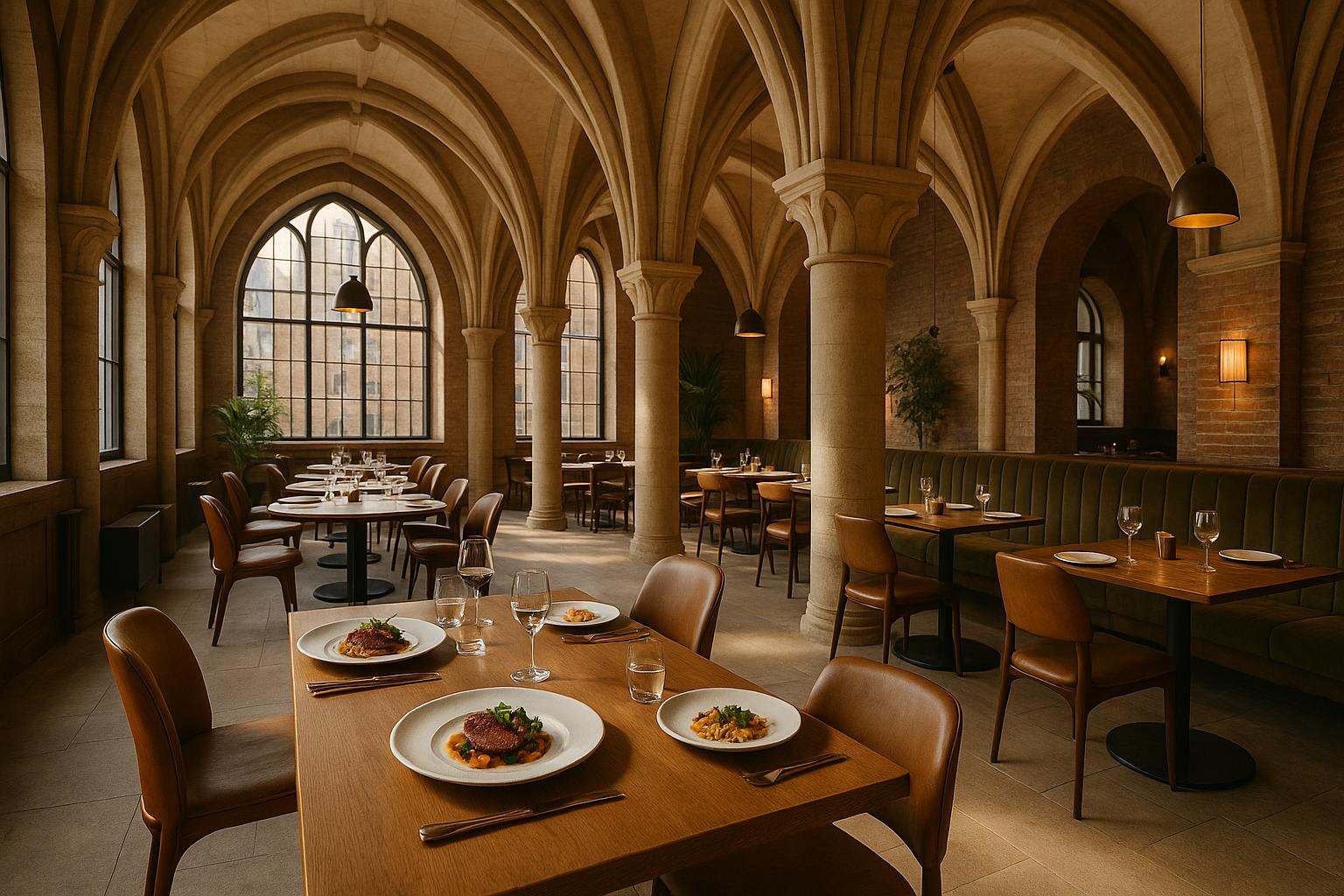
10 Architecturally Iconic Restaurants in London
London offers a dining experience that goes beyond food - where architecture and design take center stage. From transformed historic landmarks to modern masterpieces, these 10 restaurants combine striking spaces with exceptional menus. Highlights include:
- Sake no Hana: Japanese cuisine in a Brutalist icon revamped by Kengo Kuma.
- Hide: A three-story industrial space featuring a stunning oak staircase.
- Tramshed: Edwardian industrial charm meets modern dining.
- Malibu Kitchen: Californian-inspired dishes in a 1924 bank building by Edwin Lutyens.
- Sushi Samba Covent Garden: Fusion flavors in a Victorian market with sleek updates.
- Sketch: Lecture Room & Library: Artistic dining with ever-changing installations.
- Kym’s: Contemporary design by Foster + Partners in Bloomberg Arcade.
- La Dame de Pic London: French cuisine in a stylishly reimagined historic space.
- Sessions Art Club: A courthouse-turned-restaurant with Palladian architecture.
- Ave Mario: Italian-inspired drama with bold, mirror-filled interiors.
These venues highlight London's ability to blend historical spaces with modern design, creating unforgettable dining atmospheres. Whether you’re drawn to industrial aesthetics, classical elegance, or theatrical flair, these restaurants offer a visual and culinary feast.
World’s Coolest Bathroom? Sketch London & Gucci Bond Street Shopping Vlog
1. Sake no Hana
Tucked inside one of London's iconic modernist landmarks, Sake no Hana seamlessly combines Japanese cuisine with a rich architectural legacy. The restaurant resides in one of the towers of The Economist building, where post-war brutalist architecture meets contemporary Japanese design.
Architectural Designer/Firm
Sake no Hana's design is the result of two influential creative minds. The Economist building was originally designed by celebrated architects Alison and Peter Smithson. Later, Japanese architect Kengo Kuma reimagined the restaurant's interior, transforming the space while honoring the building's modernist roots. Kuma's approach preserves the structure's linear forms while introducing a touch of Japanese minimalism.
Architectural Style/Period
The Economist building represents the bold, geometric lines and raw material aesthetic of 1960s post-war brutalism. Its three-tower layout and integrated public square are hallmarks of this architectural period, and these elements echo throughout the restaurant's design.
Key Design Features
The restaurant's ambiance is enriched by the raw concrete textures and the unique spatial arrangement created by the three-tower structure. A thoughtfully designed public square acts as a smooth transition between the bustling streets and the elevated dining area.
Historical Context
As a symbol of post-war brutalist architecture, The Economist building holds a special place in London's architectural narrative. Its cultural significance adds depth to the dining experience at Sake no Hana, where historic design meets modern culinary artistry.
Dining Experience
Run by the Hakkasan group, Sake no Hana is celebrated for its refined Japanese cuisine. Guests can expect impeccable service and standout dishes, particularly its expertly crafted maki rolls. The restaurant's innovative design enhances every aspect of the dining experience, making it a destination for both food lovers and design enthusiasts alike.
2. Hide
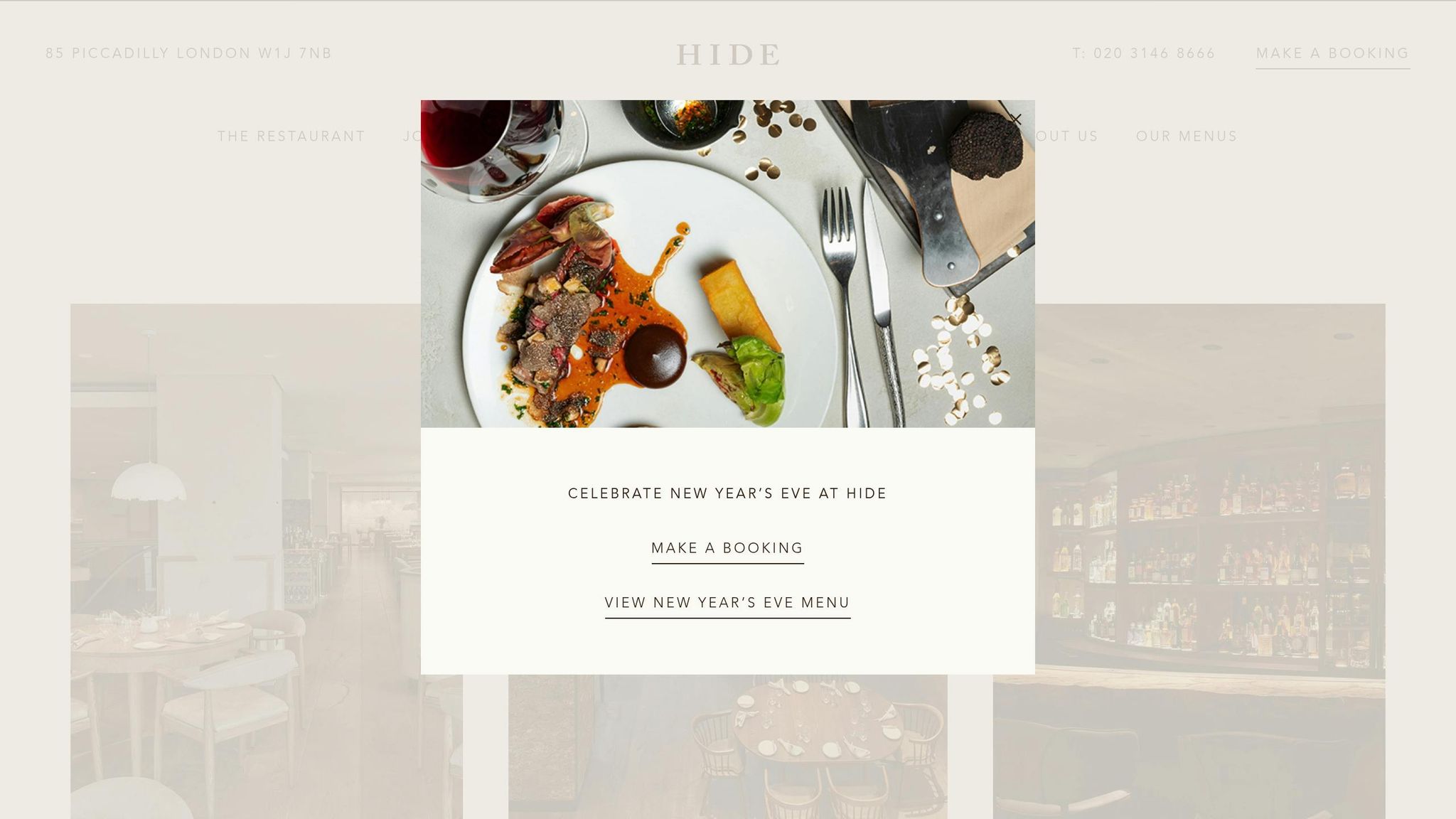
Tucked away on Rivington Street in Hackney, Hide transforms a historic industrial building into a stunning three-story dining destination. Opened in 2018, this collaboration between Hedonism Wines and chef Ollie Dabbous seamlessly blends contemporary design with the building's industrial past.
The design breathes new life into the space, balancing creative innovation with respect for its historical roots.
Architectural Designer/Firm
The interiors of Hide were designed by Atmos Studio, working closely with chef Ollie Dabbous and Hedonism Wines. The building itself underwent a significant transformation in 2012, led by Waugh Thistleton Architects, who preserved its industrial charm while introducing modern elements tailored for fine dining.
Architectural Style/Period
Originally built as a tram-generator for East London's transit network, the building stands as a testament to the city's industrial age. The renovation celebrates this history, blending its utilitarian style with contemporary touches to create a space that feels both grounded in its past and forward-looking.
Key Design Features
One of Hide's standout features is its spiraling oak staircase, which elegantly connects the three levels: Above, Ground, and Below. The restaurant retains its industrial essence with details like exposed pitched metal trusses and Edwardian glazed brick walls. Each floor offers a distinct ambiance, ensuring diners experience something unique at every level. The basement bar, in particular, adds a cozy, intimate vibe for those stopping by for drinks.
Historical Context
Hide's location - a former tram-generator building - offers a fascinating example of adaptive reuse. Once a vital part of London's transportation infrastructure, the structure now serves a completely different purpose, blending its industrial legacy with modern dining. The 2012 renovation preserved much of the original material, ensuring the building's character remains intact while adapting it for today's needs.
Dining Experience
The culinary offerings at Hide are as thoughtfully crafted as its design. Chef Ollie Dabbous curates creative set menus that vary by floor and time of day, with standout dishes like the roast barn-reared Indian Rock chicken. The multi-level layout not only enhances the architectural experience but also provides diners with diverse atmospheres to suit any occasion. Whether you're enjoying a meal in one of the dining spaces or sipping cocktails in the basement bar, Hide offers a seamless blend of history, design, and culinary artistry.
Conveniently located at 32 Rivington Street, just a short walk from Old Street tube station, Hide is where London’s industrial heritage meets modern dining excellence.
3. Tramshed
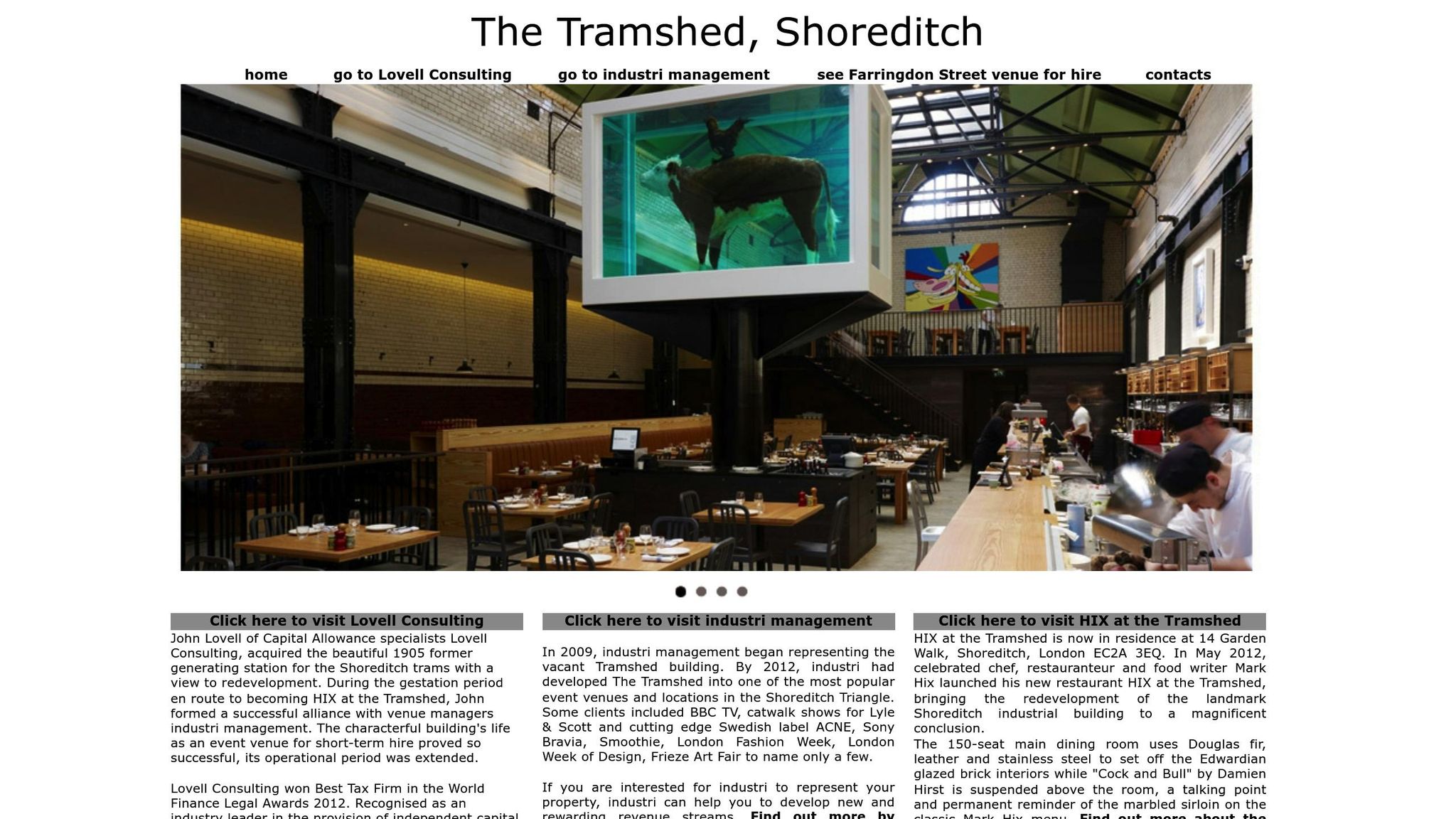
Tramshed holds a special place in East London's industrial history. Once a tram-generator building on Rivington Street, it was reimagined in 2012 as a dining venue while keeping its Edwardian roots intact. The preserved structural elements celebrate its industrial past, creating a dining space that feels both historic and modern.
Architectural Designer/Firm
The transformation of Tramshed was handled by Waugh Thistleton Architects in 2012. Known for projects like BOXPARK, the firm focused on maintaining the building's original industrial charm, ensuring its historic character remained front and center.
Architectural Style/Period
Built during the Edwardian era, the structure originally served as a tram-generator station. It exemplifies the industrial architecture of the time, prioritizing functionality and durability. Its conversion into a restaurant is a standout example of adaptive reuse, where the building's historical essence is celebrated rather than hidden.
Key Design Features
Inside, pitched metal trusses dominate the space, showcasing the building's original framework. The glazed brick walls further emphasize its industrial roots, while exposed construction details offer a glimpse into early 20th-century craftsmanship.
Historical Context
This building once powered East London's tram network in the early 1900s, playing a crucial role in the area's transportation history. Located in Hackney, it stands as a testament to the industrial legacy of the region. By repurposing the space, Tramshed demonstrates how historic buildings can be given new life as dynamic, modern destinations.
Dining Experience
The industrial backdrop provides a unique and engaging atmosphere for diners. Tramshed is known for its signature dish, which showcases top-quality British ingredients. Situated at 32 Rivington Street, Hackney (London EC2A 3LX), near Old Street station, it combines its rich historical roots with a contemporary dining experience.
4. Malibu Kitchen
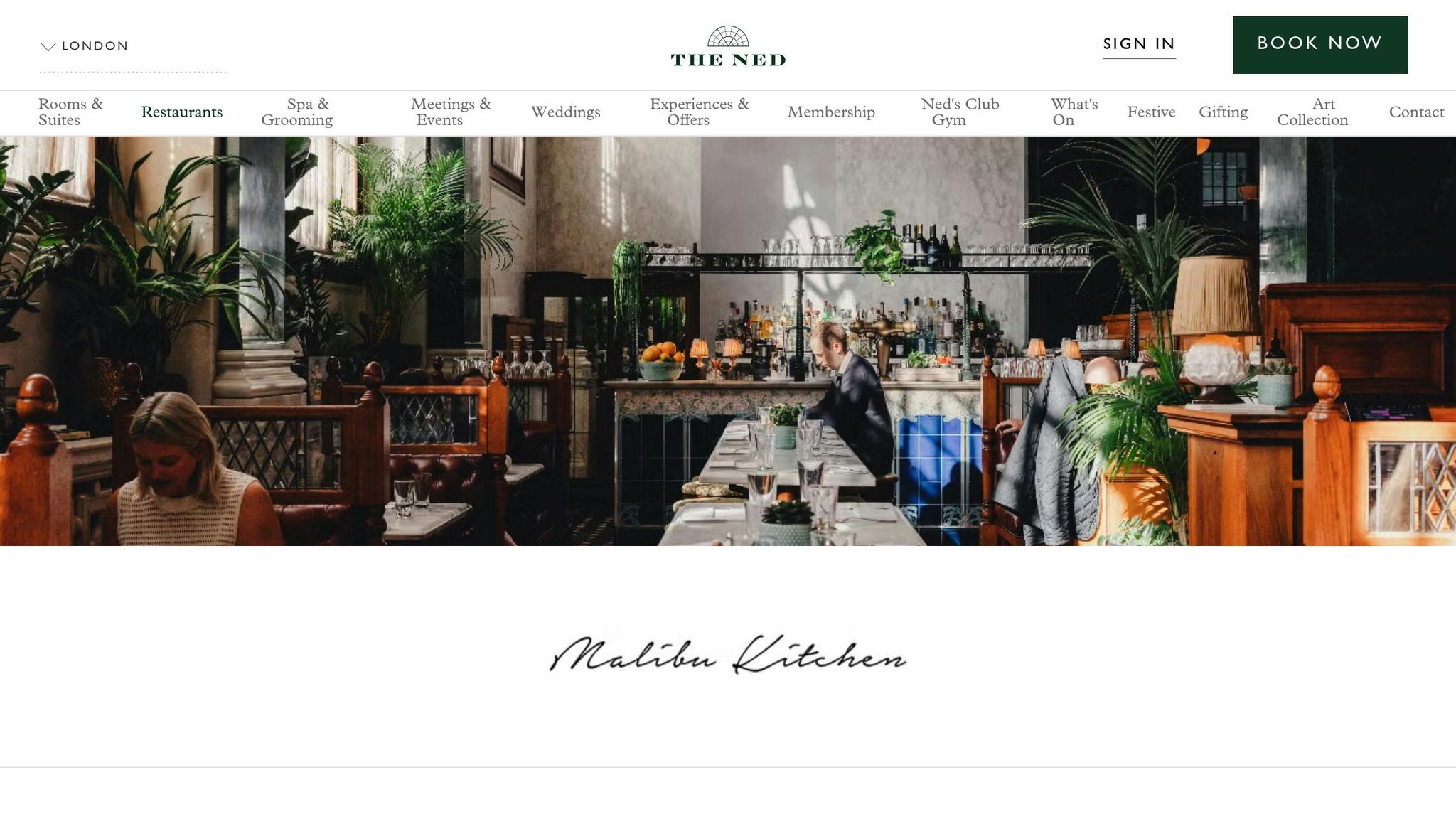
Malibu Kitchen, nestled within The Ned, brings a taste of California to the heart of London's financial district. This unique spot combines the building's historic charm with a modern culinary twist, offering a fresh perspective on dining in one of the city's most architecturally significant locations.
Architectural Designer/Firm
The building housing Malibu Kitchen was designed by the celebrated architect Edwin Lutyens. Completed in 1924 as the Midland Bank headquarters, it showcases Lutyens' exceptional ability to merge classical and neoclassical styles. His design reflects both sophistication and gravitas, qualities befitting a major financial institution of its time.
Architectural Style/Period
Built in 1924, the structure embodies early 20th-century classical architecture with subtle Art Deco influences. Its design reflects the optimism and ambition of the 1920s, a period when London's financial district was growing rapidly, and buildings were designed to convey stability and permanence.
Key Design Features
The interiors are a celebration of elegance, with soaring ceilings, intricate chandeliers, and luxurious furnishings that highlight the building's historic grandeur.
What makes Malibu Kitchen stand out is its location on the south side of The Ned, overlooking Poultry Street. This positioning allows natural light to flood the space throughout the day, creating a warm and inviting environment. The abundance of daylight contrasts beautifully with the more subdued ambiance of other high-end venues, giving the space a lively yet refined character.
Historical Context
Originally constructed in 1924 as the headquarters for Midland Bank, the building is a testament to London's financial aspirations during the early 20th century. Its transformation into The Ned has preserved its architectural beauty while giving it a new lease on life as a vibrant hub for dining and socializing.
Dining Experience
Malibu Kitchen delivers Californian-inspired cuisine, focusing on fresh, colorful dishes that are as visually appealing as they are delicious. The combination of natural light, historic splendor, and contemporary flavors creates a dining setting that's perfect for everything from business lunches to memorable celebrations.
5. Sushi Samba Covent Garden
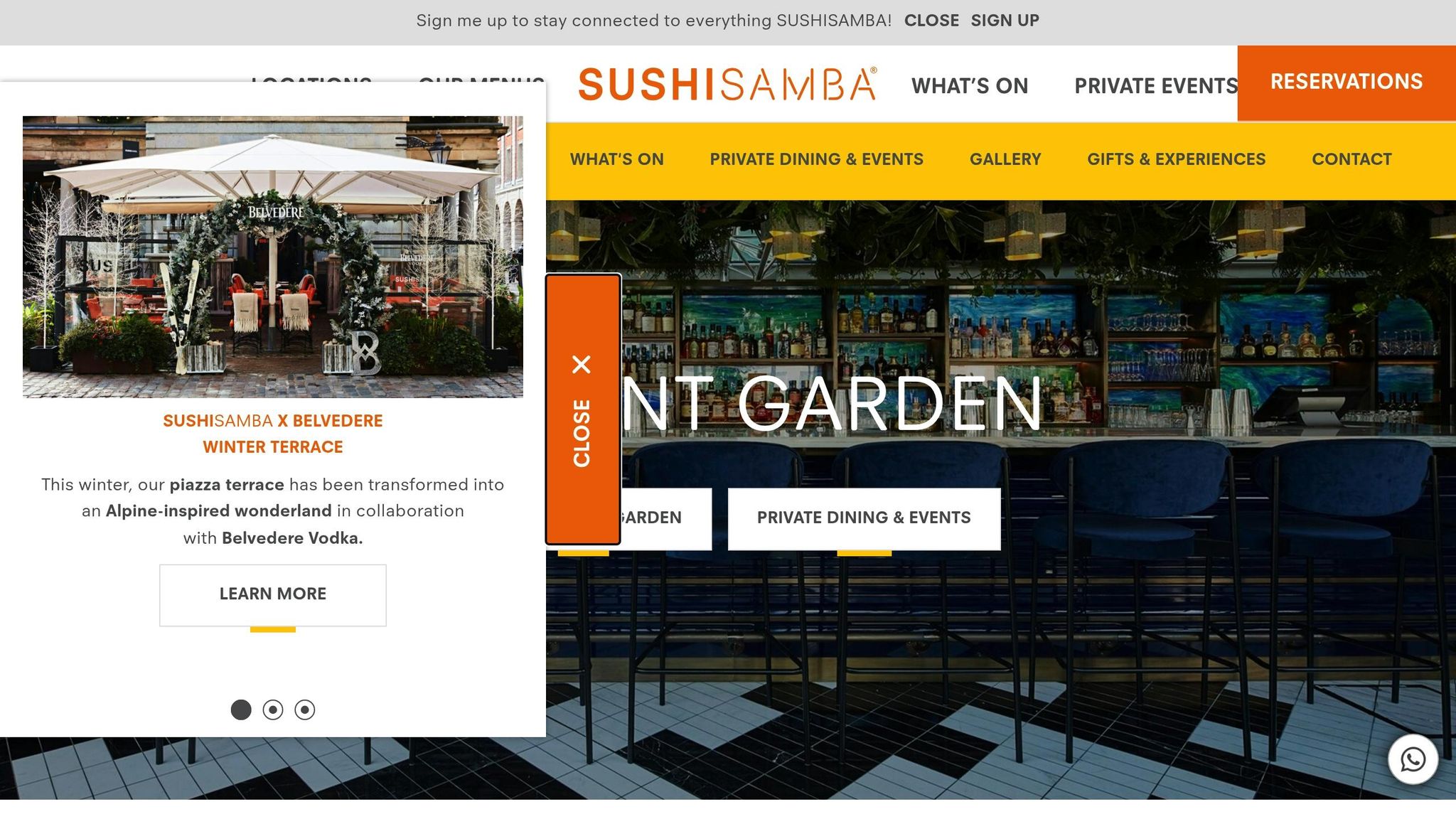
Sushi Samba Covent Garden brings together the flavors of Japan, Brazil, and Peru, all within the lively setting of London's iconic Covent Garden market. Housed in a Victorian market building that has been updated with sleek, modern interiors, it offers a unique blend of historic charm and contemporary flair. Let’s explore its design inspiration, historical significance, and dining experience.
Architectural Designer/Firm
Originally designed by Charles Fowler, the Covent Garden market building is celebrated for its glass and steel framework. The modern interior was crafted by the Belgian design studio Too Many Agencies, adding a fresh perspective to the historic structure.
Architectural Style/Period
This location is a tapestry of history. The piazza was first established in the 17th century by Inigo Jones, while Fowler’s 19th-century work introduced the iconic glass and steel market design. Recent updates have added modern elements, creating a harmonious balance between past and present.
Key Design Features
The building’s glass and steel framework allows for an open, airy space filled with natural light. This design not only highlights Victorian materials but also incorporates sleek, modern interiors. Positioned to provide stunning views and a strong connection to the bustling marketplace below, the space feels both dynamic and inviting.
Historical Context
Once a thriving vegetable market, Covent Garden has evolved into a protected historic area known for its restaurants, shops, and cultural attractions. Sushi Samba’s elevated location adds a contemporary dining experience to the rich heritage of this celebrated destination.
Dining Experience
The menu at Sushi Samba is a vibrant mix of Japanese techniques with Brazilian and Peruvian flavors, reflecting the restaurant’s blend of tradition and modernity. Whether you’re enjoying a sunlit lunch or a sophisticated evening meal, the panoramic views of Covent Garden enhance the experience, making it as visually delightful as it is flavorful.
6. Sketch: Lecture Room & Library
Tucked away in the vibrant Mayfair district, Sketch is home to several unique dining spaces, but The Lecture Room & Library truly stands apart. This space blends fine dining with artistic expression, creating an experience that feels as much about the art as it is about the food.
Key Design Features
The Lecture Room & Library boasts a bold and eclectic aesthetic. Acting as both a dining room and an art gallery, it features rotating art installations and intricately hand-drawn menus. These elements come together to craft an atmosphere that feels dynamic and immersive, offering guests a setting that’s as visually engaging as it is welcoming.
Dining Experience
Dining here is a carefully curated journey, with a menu that includes around 15 meticulously crafted dishes. Each plate showcases inventive culinary techniques and an artistic flair in presentation. The ever-changing art displays add a layer of novelty, ensuring that every visit feels fresh and inspiring - perfect for those who enjoy the seamless blend of gastronomy and contemporary art.
sbb-itb-fa1ae46
7. Kym's
Nestled in the bustling financial district of London at 19 Bloomberg Arcade, Kym's stands as a perfect blend of modern architecture and fine dining. Opened in 2017 as part of a celebrated urban development, the restaurant brings a sleek, contemporary vibe to the city’s culinary scene.
Architectural Designer/Firm
The building housing Kym's was crafted by the renowned Foster + Partners, the globally recognized architecture firm led by Norman Foster. Their innovative work on the Bloomberg Arcade earned them the coveted 2018 RIBA Stirling Prize, a prestigious accolade honoring excellence in British architecture.
Architectural Style/Period
Kym's reflects the cutting-edge spirit of contemporary design. It’s a prime example of how modern architecture can redefine dining spaces, creating environments that are as visually captivating as they are functional.
Key Design Features
The Bloomberg Arcade building showcases the forward-thinking approach of Foster + Partners. Completed in 2017, its design merges seamlessly with London’s urban landscape. The structure emphasizes both practicality and visual elegance, offering a sophisticated backdrop that perfectly aligns with the restaurant's culinary offerings.
Dining Experience
Kym's delivers more than just exceptional food; it provides an immersive experience where architecture and cuisine come together. The menu features modern takes on classic dishes, with highlights like the Iberico Pork Char Sui. The thoughtfully designed space enhances every meal, making it a feast for both the palate and the eyes.
8. La Dame de Pic London
La Dame de Pic London brings a fresh take on French cuisine, served in a setting that blends sophistication with a touch of history. While the architectural details may not be the main focus, the restaurant embodies a growing London trend: turning historic spaces into vibrant, modern dining destinations.
Inside, the design strikes a delicate balance between timeless charm and sleek, modern touches. It subtly honors the past while embracing a contemporary aesthetic, reflecting London's knack for preserving its architectural heritage while reimagining it for today’s diners. This approach places La Dame de Pic London among the city’s standout venues, where design and culinary excellence come together to celebrate the city's dynamic evolution.
9. Sessions Art Club

Sessions Art Club transforms an 18th-century courthouse in Clerkenwell into a stunning dining destination. Located within the Old Sessions House, this venue occupies a building that once served as one of England's most esteemed legal institutions. Fun fact: Charles Dickens himself reported on court cases held here.
Architectural Style/Period
The building showcases Palladian architecture, a classical style celebrated for its symmetry, balance, and refined elegance. This design approach was a hallmark of 18th-century institutional buildings, reflecting the era's emphasis on order and sophistication.
Key Design Features
Sessions Art Club retains much of its historic charm, preserving original elements like soaring ceilings, symmetrical layouts, and intricate classical detailing. By highlighting these features, the venue lets its 18th-century character shine through, offering a grand yet understated atmosphere. This careful preservation creates a photogenic and timeless setting that feels both authentic and inviting.
Historical Context
This thoughtful transformation pays homage to Clerkenwell's rich creative history while remaining open to all - no exclusive memberships required.
Dining Experience
The venue's appeal extends beyond its architectural beauty. Combining London's legal heritage with contemporary culinary artistry, Sessions Art Club offers a dining experience that feels both grand and intimate. With its mix of historic charm and modern flair, it’s a magnet for design lovers and those seeking Instagram-worthy moments.
10. Ave Mario
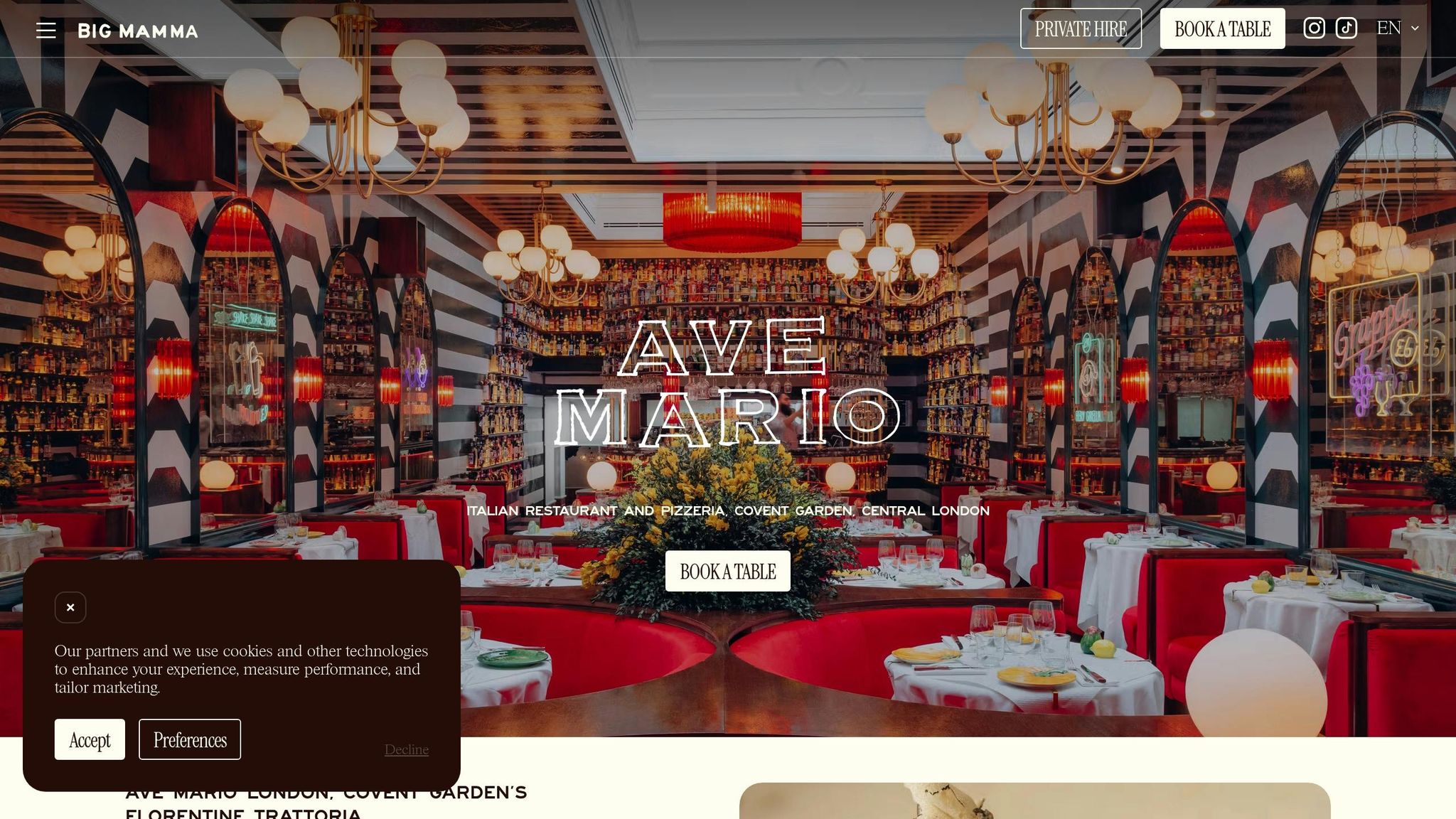
Ave Mario brings a touch of drama to Covent Garden, turning a meal into an unforgettable visual experience. It's one of London's most talked-about dining spots, blending bold design with a lively atmosphere.
Architectural Style/Period
Ave Mario takes cues from a mix of European architectural traditions, creating a space that's as eclectic as it is theatrical. The design marries elements of Italianate churches with modern, show-stopping touches, resulting in a setting that feels both timeless and cutting-edge. Instead of sticking to a single theme, the restaurant layers classical European influences with a playful, circus-like vibe that keeps things exciting.
Key Design Features
One of the standout features of Ave Mario is its extensive use of mirrors. These reflective surfaces amplify both natural and artificial light, creating a sense of endless space and constantly shifting perspectives.
"The interior fuses Italianate church elements with bold, theatrical accents, evoking the drama of a circus hall of mirrors”.
This clever use of design doesn’t just make the space visually stunning - it also sets the tone for a dining experience that's anything but ordinary.
Dining Experience
Ave Mario offers more than just a meal - it delivers an immersive experience. The dramatic interiors naturally spark conversations, encouraging guests to soak in the playful, interactive atmosphere.
The menu leans into its Italian roots, complementing the design with flavors that honor European culinary traditions while keeping things fresh and modern. With its bold colors, reflective details, and Instagram-ready aesthetics, Ave Mario is perfect for diners looking to pair great food with a visually striking backdrop.
Restaurant Comparison Table
Below is a detailed look at how each restaurant blends architectural charm with its culinary offerings.
Finding the ideal restaurant often means choosing a place where design and dining align with your personal taste.
| Restaurant | Architectural Style | Design Highlights | Cuisine Type |
|---|---|---|---|
| Sake no Hana | Post-war Modern | Situated in The Economist building, designed by Alison & Peter Smithson, with interiors by Kengo Kuma | Japanese |
| Hide | Contemporary | Features a three-story layout with a striking curling oak staircase by Atmos Studio | – |
| Tramshed | – | – | – |
| Malibu Kitchen | Art Deco/1920s | Located in a 1924 Midland Bank building by Edwin Lutyens, boasting high ceilings and chandeliers | Californian |
| Sushi Samba Covent Garden | Historic Market/Contemporary | Combines a glass and steel structure with Charles Fowler's historic market building | Japanese/Peruvian Fusion |
| Sketch: Lecture Room & Library | – | – | – |
| Kym's | Contemporary | Housed in a Foster + Partners building, winner of the 2018 RIBA Stirling Prize | – |
| La Dame de Pic London | – | – | – |
| Sessions Art Club | – | – | – |
| Ave Mario | Italianate/Eclectic | Church-inspired design with bold red accents, mirrored halls, and a circus-like atmosphere | Italian |
Each restaurant offers a unique blend of architecture and culinary style. For a fusion of historic and modern, Sushi Samba Covent Garden and Ave Mario stand out with their creative use of iconic spaces. If sleek, modern design appeals to you, Hide and Kym's are excellent choices. Prefer a touch of history? Opt for Malibu Kitchen, housed in a stunning Art Deco building.
Whether you're drawn to minimalist modernity or grand historic settings, these venues provide a perfect match of ambiance and cuisine.
Conclusion
London's dining scene isn’t just about the food - it’s a celebration of the city’s architectural heritage. Eating in these remarkable spaces offers a chance to connect with London’s rich design history while indulging in exceptional cuisine. The restaurants highlighted here show how stunning design and outstanding food can come together to create experiences that satisfy both your taste buds and your love for beautiful surroundings.
Many of these venues breathe new life into historic buildings, showcasing how thoughtful reuse can honor the past while giving these structures fresh purpose. This approach doesn’t just preserve history - it reimagines it. Each restaurant offers a unique opportunity to savor the city’s legacy while witnessing how modern design complements its storied past.
From the Edwardian elegance of Malibu Kitchen to the contemporary flair of Kym’s - recipient of the prestigious 2018 RIBA Stirling Prize - these restaurants tell the story of London’s evolving design landscape. Whether it’s the sweeping oak staircase at Hide, the reflective grandeur of Ave Mario, or the exposed metal trusses at Tramshed, each space proves that design can elevate the dining experience.
If you visit, try to go during the day to fully appreciate the architectural details and natural light. Explore multi-level venues like Hide, where each floor offers a distinct atmosphere. These restaurants aren’t just places to eat - they’re immersive experiences that highlight how London’s architectural legacy continues to shape its modern culture. Make time to see for yourself how timeless design meets innovative cuisine.
FAQs
How do the unique architectural designs of these restaurants enhance dining in London?
The design and architecture of these restaurants are integral to crafting a memorable dining experience. Picture dining in a historic building adorned with intricate details or a sleek, contemporary space that feels ahead of its time. These settings aren't just backdrops - they elevate the meal, transforming it into something more immersive and unforgettable.
These stunning spaces draw you into London's rich blend of history and modernity, making each visit feel extraordinary. Whether you're savoring a meal in a centuries-old converted church or a rooftop venue offering sweeping city views, the architecture creates a unique sense of place, adding depth to the atmosphere and strengthening your connection to the city.
How have historic buildings in London been transformed into modern restaurants?
London boasts a variety of restaurants that have transformed historic buildings into stunning dining spaces, combining old-world charm with modern culinary flair. Picture enjoying a meal in a former bank, where grand columns and ornate moldings set the stage, or dining in a repurposed church adorned with original stained glass windows and soaring vaulted ceilings. These venues don’t just serve food - they immerse you in a setting where history and contemporary design collide, creating an atmosphere that turns a simple meal into a memorable event.
Which London restaurant combines stunning architecture with exceptional dining?
London boasts an impressive array of restaurants where stunning architecture meets exceptional dining. Whether you're drawn to the charm of historic Victorian landmarks or the sleek appeal of cutting-edge contemporary designs by world-famous architects, the city offers something for every taste. These venues don't just serve food - they create an atmosphere that’s as much about the visual experience as it is about the culinary one. To discover some of London's most iconic dining spots, check out reliable food guides or directories showcasing the city's top recommendations.